
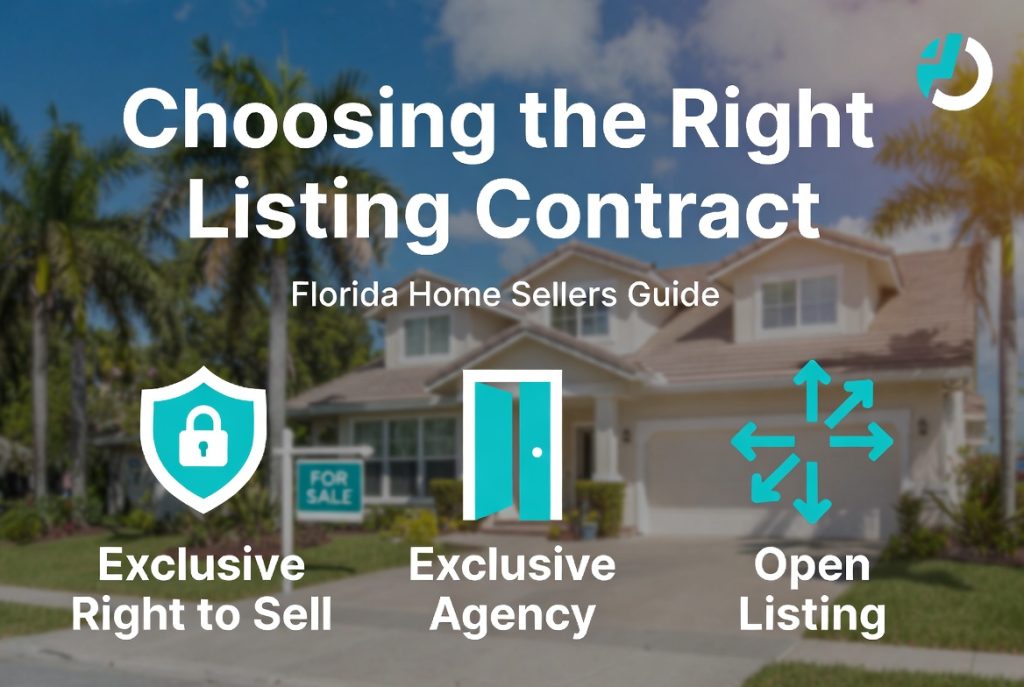
When selling your Florida home, one of the most important early decisions is the type of listing contract (or listing agreement) you sign with a real estate brokerage. This contract outlines how your property will be marketed, who can sell it, and—critically—when and how the broker earns a commission. Many homeowners assume all listing contracts are the same, but Florida law recognizes several styles, and the choice can significantly affect your flexibility, costs, and control over the sale.
The Main Types of Listing Contracts in Florida
Florida real estate professionals primarily use three common listing agreement types (a fourth, the net listing, is rarely used and carries risks):
- Exclusive Right to Sell (or Exclusive Right of Sale)
This is the most common agreement in Florida. You grant one brokerage the exclusive right to sell your home. The broker earns the full commission no matter who finds the buyer—whether it’s their agent, a cooperating broker from another office, or even you (the seller) if you bring a buyer during the listing period.- Advantages: Brokers invest heavily in marketing (MLS listing, professional photos, staging advice, open houses, etc.) because their compensation is protected. This often leads to broader exposure and more motivated effort.
- Disadvantages: Least flexible for sellers. If you find a buyer yourself (e.g., a neighbor or family friend), you still owe the commission.
- Exclusive Agency
You work exclusively with one brokerage, but you reserve the right to sell the home yourself without paying a commission. The broker only earns commission if they (or a cooperating agent) procure the buyer.- Advantages: More seller-friendly if you’re actively trying to sell FSBO (For Sale By Owner) alongside professional help.
- Disadvantages: Brokers may be less inclined to pour resources into marketing since their commission isn’t guaranteed. Some brokerages avoid this structure altogether.
- Open Listing (Non-Exclusive)
You can list with multiple brokerages simultaneously (or sell it yourself). Only the broker who actually brings the successful buyer earns the commission.- Advantages: Maximum flexibility and no obligation if you sell it yourself.
- Disadvantages: Brokers have less incentive to market aggressively because another agent (or you) could swoop in and claim the sale.
Note: Net listings (where the broker keeps anything above a minimum net price you set) are allowed in Florida but discouraged due to potential conflicts of interest.
Why Most Brokerages Default to Exclusive Right to Sell—and What That Means
Here’s a key reality that many Florida sellers overlook: most traditional brokerages do not offer a real choice. They almost always push (or require) the Exclusive Right to Sell agreement. Why?
- It protects their time, marketing investment, and compensation. Without this protection, agents risk spending weeks or months on showings, advertising, and negotiations only for the seller to close a deal independently and leave them unpaid.
- It aligns incentives for full-service representation, including MLS exposure, which dramatically increases buyer traffic in competitive Florida markets (think Miami, Orlando, Tampa, or coastal areas).
- Industry standard forms make this the default for full-service listings.
If a brokerage insists on Exclusive Right to Sell without discussing alternatives, it’s not necessarily shady—it’s how they protect their business model. However, it limits your options if you want more control or plan to market the home aggressively yourself. Some specialized or flat-fee services (like those highlighted on sites such as newbuildbuyer.com/sell-my-home/) may offer more flexibility, including variations that better suit sellers who want to retain FSBO rights while still getting professional MLS placement or limited services. Always ask explicitly: “Do you offer Exclusive Agency or Open Listing options, or only Exclusive Right to Sell?”
How to Choose the Right Listing Contract Style for Your Florida Home
Choosing the best contract depends on your situation, goals, and how hands-on you want to be. Here’s a practical guide:
- Choose Exclusive Right to Sell if:
- You want maximum professional effort and broad market exposure.
- You’re not planning to market the home yourself or have a ready buyer lined up.
- You’re selling in a competitive Florida market where MLS visibility and agent networking matter most.
- You’re comfortable with the commission structure in exchange for full service.
- Choose Exclusive Agency if:
- You want professional help but plan to actively try selling it yourself (e.g., to friends, family, or through your own networks).
- You’re okay with potentially less aggressive marketing from the broker.
- You value the ability to avoid paying commission on a self-procured buyer.
- Choose Open Listing if:
- You want total flexibility and are willing to coordinate multiple agents (or go mostly FSBO).
- You’re testing the market or have a very specific buyer in mind.
- You’re prepared for potentially slower results and less coordinated marketing.
Additional factors to weigh:
- Commission and fees: Negotiate these regardless of contract type. Florida doesn’t set rates—everything is negotiable.
- Listing duration: Shorter terms (e.g., 90-180 days) give you more exit flexibility than the typical 6-12 months some brokers request. Ensure there’s a clear expiration date (required by Florida law).
- Marketing commitments: Ask what the broker will actually do (MLS, photos, virtual tours, etc.).
- Your risk tolerance: Exclusive Right to Sell shifts more risk to you on the commission side but reduces your marketing burden.
- Local market conditions: In hot Florida areas, full exposure via Exclusive Right often sells faster and for more money. In slower markets, flexibility might matter more.
Before signing anything, read the full agreement carefully. Florida law requires specific elements like a definite expiration date, property description, price/terms, and commission details. Consider having a real estate attorney review it, especially if negotiating custom terms.
We offer all contract types besides net listings here at NBBR, click here to learn more.
Final Advice for Florida Sellers
Don’t assume your only option is the standard Exclusive Right to Sell that most brokerages default to. Shop around and ask questions—some services (including alternatives mentioned on sites like newbuildbuyer.com) emphasize seller choice and may accommodate different styles or hybrid approaches that balance protection for the broker with flexibility for you. The right listing contract aligns the brokerage’s incentives with your goals: a smooth, profitable sale with minimal surprises. Take time upfront to understand your options, negotiate where possible, and choose the style that gives you the best shot at success in Florida’s dynamic real estate market. Selling a home is a big step—empower yourself with knowledge so the contract works for you, not just the brokerage. If you’re exploring options, compare full-service traditional listings against more flexible or flat-fee models to find the best fit.